Green coffee intake systems
Engineering the starting point of your roastery
Green coffee intake is where production begins. Done well, it allows coffee to be received safely, cleanly and efficiently while connecting seamlessly to cleaning, storage and conveying downstream. Done poorly, it creates daily operational friction through dust, manual handling, congestion and unstable feeding. At Roastworks, we engineer intake as a production system - ensuring controlled coffee reception today while preparing roasteries to scale tomorrow.
Why intake deserves proper engineering
Safe, ergonomic unloading
Efficient dedusting at the source
Controlled release into production
Data capture at the source
Intake architectures we offer
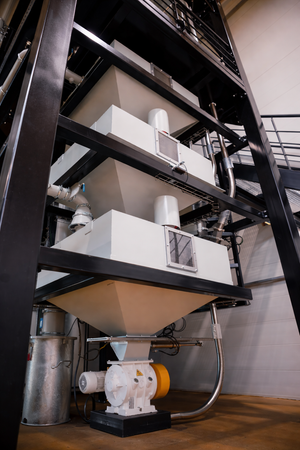
Coffee arrives in batches - from a few pallets to full truckloads - and is then stacked on racks or prepared for production. When scheduled for processing, coffee may remain staged for hours or days depending on roasting priorities, cleaning availability, silo levels and quality checks, before being discharged into the intake station.
Built for real production
Our systems operate in real facilities, every day. Explore how Roastworks solutions integrate into different production environments worldwide.
Pallet & jute bag intake
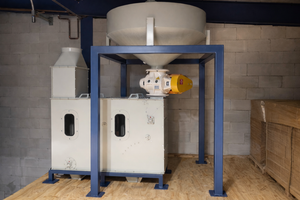
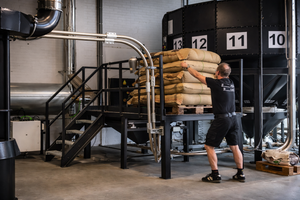
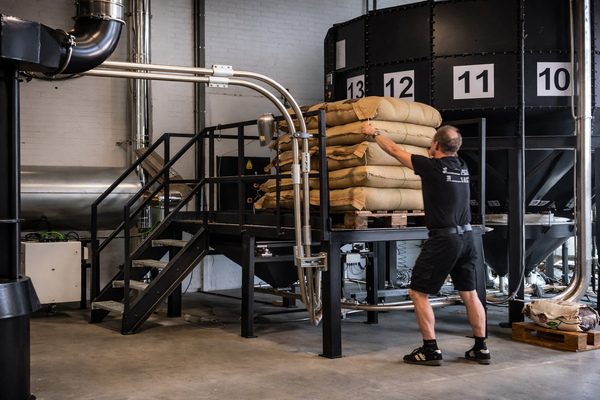
For jute bags, coffee is unloaded manually into intake hoppers fitted with walkable grates. When excavation is possible, floor-level pits minimise lifting and handling. When not, elevated hoppers installed on dedicated structures provide ergonomic access using forklifts. In compact layouts, intake hoppers can be engineered for single-bag unloading rather than full pallets, maximising space efficiency.
Big bag intake
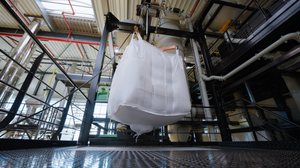
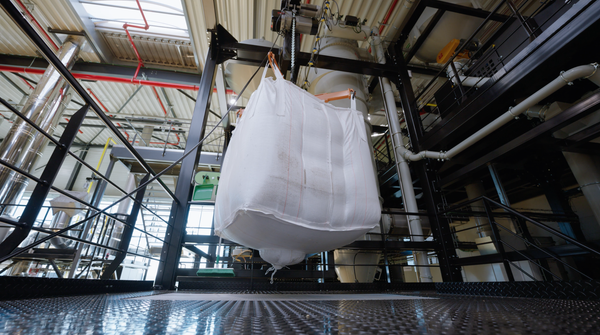
Big bag intake systems are built around safe lifting, stable bag positioning and controlled discharge, using forklift-loaded frames, automated discharge stations or hoist-based systems - depending on layout, budget and how ready you are to temporarily tie up both a forklift and an operator. These systems significantly reduce manual handling, improve unloading speed and increase throughput as volumes grow.
Safety & emissions - Dedusting at intake
Green coffee intake is the dustiest area of the roastery. When bags are opened and coffee is discharged, fine dust is instantly released. Without proper control, it spreads through the workspace, creating health risks, explosion hazards and contamination.
Effective dedusting is therefore engineered directly into the intake station. Controlled airflow, dedicated aspiration and integrated filtration capture dust at the point of release, maintaining clean working conditions and enabling ATEX-compliant operation.
Automation, weighing & system integration - Engineered together
A roastery performs best when intake acts as the controlled interface between logistics and production, not as a standalone unloading point.
Integrated weighing verifies the quantity of coffee received and establishes the first production record of incoming lots.
When cleaning is part of the process, weighing after cleaning confirms how much coffee has been sorted and remains available for production. Combined with production software, intake weighing also becomes the starting point for inventory management.
The result is less manual tracking and smoother coordination between intake, cleaning, storage and roasting operations.
Modularity & scalability - Planned, not oversized
Roasteries often operate with ambitious growth plans. Doubling production within a few years - and sometimes growing much faster - is common, especially among specialty coffee roasteries.
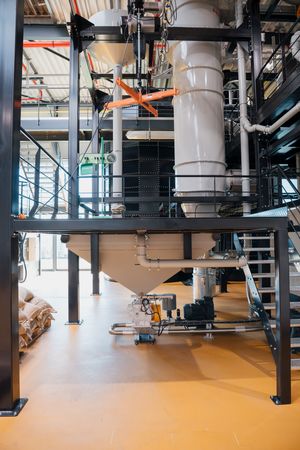
With intake systems, modularity often means keeping flexibility: one intake station may feed multiple roasters directly when silos are bypassed, or later connect to new cleaning systems or added silo storage. Anticipating these evolutions avoids costly retrofits once production grows.
This means designing modular conveying layouts, anticipating future machines and preparing routing so new equipment can be integrated without costly retrofits. That is where good engineering matters. Together, we build a predictable roadmap for expansion so growth can happen without premature investment.
The goal is simple: control CAPEX today while preserving flexibility tomorrow.
Engineering approach - Designing intake systems that work
An intake system performs best when engineered as part of the complete production flow - from coffee reception to cleaning, storage, conveying and roasting.
Our engineering approach begins by understanding:
- Building geometry and structural constraints, including possibilities such as ground-level intake hoppers or elevated unloading stations
- Fire safety, ATEX requirements and dust treatment strategies
- Interfaces between intake, cleaning, storage, conveying and roasting equipment
- Current production volumes and expected growth
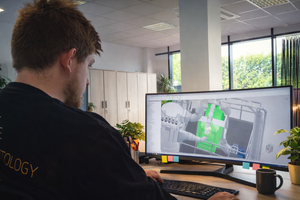
Depending on the project, we either translate a defined specification into a robust design or help shape the specification before key decisions are locked in.
From there, we engineer:
- Flexible bypass solutions allowing coffees to be routed toward cleaning, storage or roasting as production requires
- Intake architecture and routing adapted to plant layout
- A realistic expansion roadmap designed for future phases, with headroom allowing larger quantities to be treated as production grows
- Integration with cleaning, conveying and roasting operations
- Downstream conveying interfaces
Questions? We’re here to assist.
The choice depends on daily volume, labour availability, safety targets and long-term growth. Jute bag intake offers flexibility and low initial investment, while big bag systems significantly reduce manual handling and increase throughput. Many roasteries adopt hybrid stations that allow both formats, enabling gradual transition as volumes grow.
Both approaches work. Floor pits minimise lifting and handling, offering excellent ergonomics and dust capture. Elevated hoppers are used when excavation is not possible and can still deliver clean, safe and efficient operation. The choice depends on building constraints, layout and budget.
Automation should follow operational value, not ambition alone. Many roasteries begin with simple manual systems while preparing mechanical and control infrastructure for future upgrades. This phased approach limits upfront cost while ensuring smooth evolution toward higher throughput, traceability and automation.
Need help choosing the right intake solutions?
Every roastery and growth plan is different. Talk with us and design your optimal intake architecture.